
Estimated Reading Time: 7-8 minutes
Table of Contents
- Why Protective Order Hearings Create Unique Challenges
- Pros of Testifying at a Protective Order Hearing
- Cons of Testifying While Criminal Charges Are Pending
- Finding the Right Strategy When Both Cases Overlap
- Legal Support from The Law Offices of Daniel J. Miller
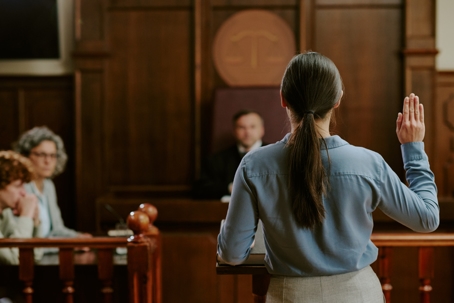
A protective order hearing and a criminal case may involve the same people, the same incident, and the same emotions. But legally, they operate on separate tracks. When someone faces criminal charges related to the conduct that prompted a request for a protective order, both cases can influence each other in powerful ways. One of the biggest strategic questions that arises is whether the accused should testify at the protective order hearing.
The decision matters. Protective order hearings move quickly, often requiring testimony and evidence long before a criminal case reaches trial. Speaking in one courtroom can echo into the other. Understanding the legal implications helps defendants make informed choices that protect their rights.
Why Protective Order Hearings Create Unique Challenges
Protective orders are civil proceedings. They use a lower standard of proof, move on tighter timelines, and sometimes allow evidence that a criminal court might limit or exclude. Judges may issue temporary restrictions that affect a person’s home life, parenting time, and access to shared property.
At the same time, criminal charges involve constitutional protections, higher standards of proof, and stricter evidentiary rules. Anything said under oath in the civil case can be used by prosecutors later. This is why testifying at a protective order hearing is not just a question of “telling your side.” It is a strategic legal decision that requires weighing immediate benefits against long-term risks.
Pros of Testifying at a Protective Order Hearing
1. Offering a direct explanation of events
Testimony gives the respondent the opportunity to tell their version of what happened. If the allegations are exaggerated or inaccurate, speaking clearly and calmly at the hearing may help the judge see gaps or inconsistencies in the petitioner’s story. In some cases, this can influence the outcome more strongly than documents alone.
2. Providing context that might otherwise be missing
Protective order hearings often involve emotional narratives. A judge may benefit from hearing the circumstances leading up to the incident, the dynamics between the parties, or other context that changes how the allegations are understood. When that context is compelling and truthful, testimony can correct assumptions.
3. Demonstrating credibility and cooperation
A respectful, consistent account may help establish credibility. Some judges look closely at how each party presents themselves when deciding whether a long-term protective order is justified.
4. Potentially avoiding the consequences of a long-term protective order
Long-term protective orders can affect employment, security clearances, firearm rights, and family relationships, and they can also create exposure to additional legal consequences if someone is accused of a violation of a protective order.
Cons of Testifying While Criminal Charges Are Pending
1. Statements become evidence in the criminal case
This is the most significant concern. Anything stated under oath can be used by prosecutors if the facts overlap with the criminal charges. Even small inconsistencies can be taken out of context or interpreted negatively in the criminal case.
2. Cross-examination may reveal information unintentionally
High-stakes cross-examination can lead to answers that sound different than intended. Nervousness, the stress of the situation, or confusion about a question may create statements that prosecutors later examine carefully.
3. Limited protection compared to criminal proceedings
In a criminal trial, defendants have clear constitutional protections. In a civil protective order hearing, those protections apply differently. The respondent cannot be compelled to testify, but once they choose to, they open themselves up to questioning that might not occur in the criminal courtroom.
4. Risk of misinterpretation
Civil judges sometimes interpret statements more broadly. A comment meant to explain circumstances may be interpreted as minimizing harm or accepting partial responsibility. This can strengthen the petitioner’s case and potentially influence decisions about long-term restrictions.
5. Impact on plea negotiations
Prosecutors review every available piece of evidence when negotiating. Testimony that appears inconsistent or defensive may weaken the defense’s position in future discussions.
Finding the Right Strategy When Both Cases Overlap
There is no universal answer on whether a defendant should testify. The strengths of the evidence, the nature of the allegations, the timeline of the criminal case, and the overall defense strategy all play a role. The most effective approach is one guided by legal counsel familiar with both civil protective orders and criminal defense.
Legal Support from The Law Offices of Daniel J. Miller
Legal strategy becomes critical when two cases intersect. Our team at The Law Offices of Daniel J. Miller understands how protective order hearings and criminal charges influence each other, and we approach each case with a clear, coordinated plan. We evaluate the potential risks of testifying, review the evidence in both matters, and guide our clients on the safest path forward.
We examine how statements might be interpreted in criminal proceedings, assess what the petitioner may present at the hearing, and determine whether remaining silent or presenting limited evidence may offer better protection. When testimony is appropriate, we help clients prepare to communicate effectively, avoid harmful phrasing, and maintain clarity under cross-examination.
Our goal is to protect our clients’ constitutional rights, strengthen the defense across both cases, and reduce the long-term impact that protective orders and criminal charges can create. With careful planning and informed legal guidance, our clients gain a clearer understanding of their options and feel supported through a challenging legal process.
If you are facing a protective order hearing while criminal charges are pending, our team at The Law Offices of Daniel J. Miller offers the legal insight and courtroom strategy needed to navigate both cases with confidence. Contact us at (757) 267-4949 to schedule a consultation.